Evaluating High-Resolution Cow Animal 3D Renders for Professional Design Projects
In the evolving landscape of digital design, the demand for high-quality, ready-to-use assets has never been more critical. Designers, marketers, and content creators frequently find themselves balancing the need for visual impact against the constraints of time and budget. One specific resource that has gained traction for its versatility and aesthetic appeal is the Cow Animal 3d Render. Unlike traditional photography or hand-drawn illustrations, these renders offer a unique blend of realism and stylization that can elevate various creative outputs. When evaluating such assets, particularly those offered as specification files in PNG format with dimensions around 4000px by 3000px, it is essential to understand not just what they are, but how they fit into a broader workflow compared to other visual mediums.
Defining the Asset: Specifications and Visual Characteristics
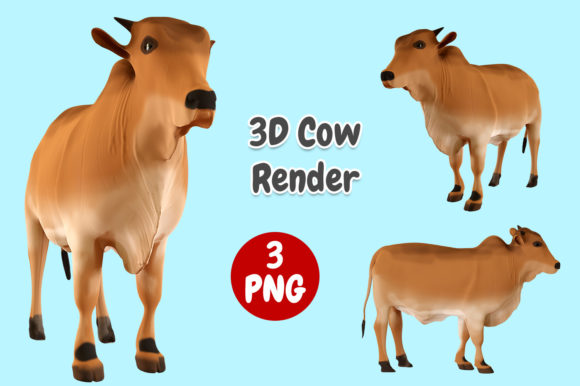
A Cow Animal 3d Render refers to a computer-generated image of a bovine subject, created using three-dimensional modeling software. The specific iteration discussed here is characterized by its high resolution—approximately 4000 pixels in width and 3000 pixels in height. This pixel density is significant because it places the image well within the range required for high-definition print media, such as posters and large-format advertisements, while remaining perfectly scalable for digital screens.
The file type is typically PNG (Portable Network Graphics), which is a crucial distinction for professional use. Unlike JPEGs, which use lossy compression and often introduce artifacts around edges, PNG supports lossless compression and, more importantly, alpha channel transparency. A cutout image with a transparent background means the subject is isolated from any environment, allowing designers to place the cow seamlessly onto any colored background, texture, or complex scene without the need for tedious manual masking or erasing. Furthermore, the absence of watermarks ensures that the asset is ready for immediate commercial deployment, removing legal ambiguities regarding usage rights that often plague free stock resources.
Comparative Analysis: 3D Renders vs. Photography and Illustration
When choosing visual elements for a project, professionals usually weigh three primary categories: stock photography, custom illustration, and 3D rendering. Understanding where the Cow Animal 3d Render fits among these options is vital for making an informed decision.
Versus Stock Photography: Traditional photography offers undeniable authenticity, capturing the organic imperfections of real life. However, photographic assets often come with lighting limitations. If a designer needs a cow lit from a specific angle to match a composite scene, finding a stock photo with that exact lighting setup is nearly impossible. Additionally, photos usually include backgrounds that must be removed, a process that can degrade edge quality, especially around fine details like fur. The 3D render alternative provides consistent, studio-like lighting and perfect isolation. While it may lack the "grit" of a real farm photo, it offers a level of control and cleanliness that photography cannot match without extensive post-production.
Versus 2D Illustration: Hand-drawn or vector illustrations are excellent for stylized branding but require significant time to create or commission. They rely heavily on the artist's specific style, which may not align with every project's tone. A 3D render bridges the gap; it possesses depth, shadow, and volume that flat illustrations lack, yet it maintains a polished, almost hyper-real aesthetic that feels modern and engaging. For projects requiring a friendly yet professional look—such as greeting cards or educational materials—the 3D approach often strikes a better balance than the abstraction of 2D art.
Practical Applications and Use Cases
The utility of a high-resolution, transparent PNG extends across numerous mediums. Because the Cow Animal 3d Render is provided at 4000x3000 pixels, it serves as a robust foundation for both digital and print environments.
- Greeting Cards and Invitations: The charming nature of animal renders makes them ideal for birthday cards, baby showers, or agricultural-themed event invitations. The transparent background allows the image to sit comfortably on patterned paper designs without clashing.
- Social Media and Content Marketing: In the fast-paced world of social media, visuals must grab attention instantly. These renders can be used as standalone posts or integrated into carousel slides. Their high resolution ensures they look crisp even on retina displays and high-DPI mobile screens.
- Video Element Content: While a PNG is a static image, it can be imported into video editing software to create dynamic motion graphics. Designers can add scale, rotation, or drop shadows to the cutout image to integrate it into video intros, explainers, or promotional clips.
- Advertising and Posters: For large-format printing, resolution is king. An image size of roughly 4000px ensures that when printed at standard DPI (dots per inch), the output remains sharp and free of pixelation, making it suitable for storefront posters or trade show banners.
Decision Factors: Strengths, Tradeoffs, and Limitations
No single asset type is the solution for every scenario. When evaluating whether to utilize a Cow Animal 3d Render, one must consider specific project requirements.
Strengths: The primary advantage lies in efficiency and consistency. The "plug-and-play" nature of a pre-rendered, transparent PNG saves hours of work. There is no need to model, texture, light, or render the scene from scratch. The visual style is generally universally appealing, avoiding the uncanny valley sometimes found in low-budget 3D work while maintaining a clean, commercial look.
Tradeoffs: The main limitation is flexibility regarding pose and angle. Since this is a rendered image file (PNG) rather than the raw 3D model file (such as .OBJ or .FBX), the viewer cannot change the camera angle or the cow's posture. If a project specifically requires the animal to be viewed from the rear or in mid-jump, and the available render is a static front-facing view, this asset will not suffice. In such cases, commissioning a custom 3D model or sourcing a different specific render would be necessary.
Best-Fit Situations: This asset is the optimal choice when the timeline is tight, the budget does not allow for custom 3D modeling, and the visual requirement aligns with the available pose. It is also superior for projects where a clean, isolated subject is needed against varying backgrounds, such as in e-commerce layouts or modular web designs.
Integration and Technical Considerations
For web developers and designers, the technical specifications of the file matter. A 4000x3000 pixel PNG can have a relatively large file size depending on the complexity of the render and the compression applied. While this is negligible for print or high-end video production, web performance is a valid concern. When using these images on websites, it is advisable to create optimized versions (compressing the file size while maintaining visual quality) for screen display, while keeping the original high-res file for print derivatives.
Furthermore, the lack of watermarks is a significant indicator of professional-grade licensing. Users should always verify the specific license agreement associated with the download. Typically, assets described in this manner are intended for both personal and commercial use, but due diligence is required to ensure compliance, especially for large-scale advertising campaigns.
Making the Final Choice
Selecting the right visual asset is a strategic decision that impacts the overall quality and efficiency of a design project. The Cow Animal 3d Render represents a pragmatic middle ground between the rigidity of stock photography and the resource intensity of custom creation. Its high resolution, transparent background, and clean aesthetic make it a versatile tool for a wide array of applications, from digital social media elements to large-scale printed posters.
However, it is not a universal substitute for all visual needs. If a project demands absolute photorealism with environmental context, or if it requires dynamic manipulation of the subject's geometry, alternative approaches such as custom photography or raw 3D modeling may be more appropriate. For the majority of standard commercial design tasks where speed, clarity, and visual appeal are paramount, this type of specification file offers a compelling value proposition.
Ultimately, the decision rests on the specific constraints of your project. By understanding the distinct advantages of 3D renders over traditional media and recognizing their limitations regarding flexibility, designers can deploy these assets more effectively. Whether you are crafting a heartfelt invitation or a bold advertisement, leveraging high-quality, pre-rendered assets allows you to focus more on composition and messaging, ensuring the final output resonates with your audience.
If you have specific questions regarding the compatibility of these files with your current workflow, or if you need clarification on licensing terms for a particular campaign, please feel free to contact me through my profile page. I am glad to help you navigate these choices to ensure your project succeeds.