Elevating Digital Interfaces with Bicycle Set Icons in Isometric 3D Style
In the rapidly evolving landscape of digital design, the visual language we use to communicate with users has shifted dramatically. Flat design dominated the last decade, offering clarity and speed, but as screens become more advanced and user expectations rise, there is a growing hunger for depth, texture, and realism. This is where a Bicycle Set Icons, Isometric 3D Style collection becomes an invaluable asset for modern creators. These are not merely decorative elements; they are functional tools that bridge the gap between abstract concepts and tangible reality, particularly in industries ranging from logistics and fitness to urban planning and e-commerce.
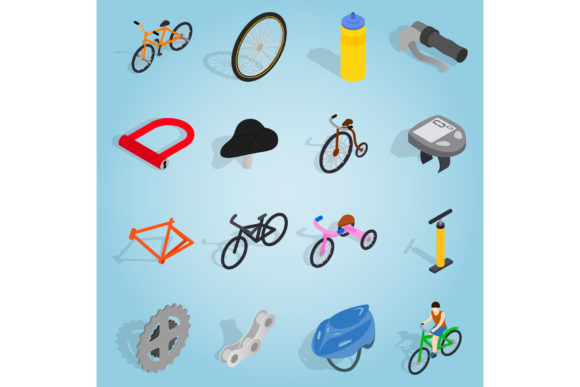
The relevance of isometric illustration today cannot be overstated. As businesses strive to differentiate their brands in crowded app stores and saturated web markets, the aesthetic quality of user interface (UI) components plays a pivotal role in retention and engagement. An Isometric bicycle icons set offers a unique blend of technical precision and artistic flair. Unlike traditional two-dimensional symbols, isometric graphics provide a pseudo-3D perspective that allows viewers to understand the structure and function of an object instantly. For a bicycle, this means showcasing the frame geometry, wheel depth, and accessory placement in a way that feels substantial and reliable.
The Shift Toward Depth and Realism in User Experience
For years, the design community adhered strictly to minimalism. While effective for reducing cognitive load, pure flat design can sometimes feel sterile or generic. We are currently witnessing a correction in this trend, often referred to as "flat 2.0" or semi-realism, where designers reintroduce lighting, shadows, and dimension without sacrificing usability. This evolution aligns perfectly with the capabilities of modern high-resolution displays on smartphones, tablets, and desktop monitors.
When integrating Universal bicycle icons to use for web and mobile UI, the choice of style dictates the tone of the entire application. A delivery app using flat line art might feel efficient but impersonal. However, swapping those assets for a high-quality isometric set can evoke a sense of robustness and trust. It suggests that the service is tangible and the vehicles are real, which is crucial for gig economy platforms, rental services, and fitness trackers. Users subconsciously associate higher-fidelity graphics with higher-quality services, making the investment in premium vector illustrations a strategic business decision rather than just an artistic one.
Furthermore, the isometric perspective solves specific layout challenges. Because these icons are drawn at a consistent angle (usually 30 degrees), they fit together like building blocks. This modularity allows designers to create complex scenes, infographics, and onboarding flows that feel cohesive. A set of basic bicycle elements vector illustration enables this flexibility, allowing a creator to swap out a basket, change the wheel type, or add a helmet without breaking the visual consistency of the project.
Versatility Across Formats and Workflows
One of the most practical aspects of acquiring a comprehensive icon set is the availability of multiple file formats. Professional workflows rarely rely on a single file type; instead, they require adaptability across different stages of production. A robust collection typically includes JPG, EPS, AI, PSD, and PNG formats, each serving a distinct purpose in the creative pipeline.
- AI and EPS: These vector formats are the backbone of scalable design. Whether you are designing a tiny favicon or a massive billboard advertisement, vector files ensure that the edges of your bicycle icons remain crisp and pixel-perfect. They allow for infinite resizing and easy color manipulation directly within software like Adobe Illustrator.
- PSD: For designers who prefer layer-based editing in Photoshop, PSD files offer granular control over lighting effects, shadows, and textures. This is essential when trying to match the icons to a specific brand palette or when compositing them into photorealistic marketing materials.
- PNG: The workhorse of web development. PNGs with transparent backgrounds are ready to drop into code, ensuring that the isometric depth displays correctly against any website background color or pattern.
- JPG: Useful for quick previews, presentations, or situations where file size is a critical constraint and transparency is not required.
This variety ensures that freelancers, agency teams, and in-house designers can integrate these assets seamlessly regardless of their preferred toolset. It eliminates the friction of converting files, which often leads to quality loss, and speeds up the time-to-market for new features or campaigns.
Meeting Modern Market Demands and Lifestyle Shifts
The surge in popularity for bicycle-related imagery is not accidental; it mirrors significant global lifestyle shifts. Urbanization, environmental consciousness, and the post-pandemic focus on health have propelled cycling from a niche hobby to a mainstream mode of transport and leisure. Consequently, digital products serving this demographic need visuals that resonate with this new reality.
Consider the rise of micro-mobility solutions. Cities worldwide are investing in bike-share programs and dedicated lanes. Apps facilitating these services require intuitive interfaces where users can quickly identify bike availability, docking stations, and route types. An Isometric bicycle icons set provides the visual clarity needed for these maps and dashboards. The 3D style helps distinguish between different vehicle types—such as electric bikes versus standard pedalcycles—at a glance, improving the overall user experience.
Moreover, the fitness industry has seen a massive digital transformation. Smart trainers, connected bikes, and performance tracking apps rely on engaging visuals to motivate users. Gamification is a key strategy here. Isometric icons, with their playful yet structured appearance, fit naturally into gamified interfaces, reward systems, and achievement badges. They make the data feel less like a spreadsheet and more like a journey, encouraging continued engagement from the user base.
Practical Implications for Creators and Businesses
For entrepreneurs and marketers, the decision to use specialized iconography extends beyond aesthetics; it impacts brand identity and conversion rates. Generic stock photos often fail to convey a unique brand voice. In contrast, a curated set of basic bicycle elements vector illustration allows for custom storytelling. You can build a narrative around your brand by consistently using these elements across your landing pages, social media assets, and email newsletters.
From a technical standpoint, using vector-based isometric icons improves site performance compared to loading heavy photographic assets. When optimized correctly, SVGs derived from AI or EPS files load instantly and scale perfectly on retina displays, contributing to better Core Web Vitals scores—a critical factor for SEO and search ranking. Google's algorithms increasingly favor sites that offer a superior user experience, and fast-loading, crisp visuals are a component of that experience.
Additionally, these assets facilitate better communication in educational and informational content. Bloggers and educators writing about bicycle maintenance, safety gear, or urban infrastructure can use these icons to break down complex topics. Instead of describing a specific part of a bike, they can point to a clear, stylized representation. This enhances comprehension and keeps readers engaged longer, reducing bounce rates and increasing the likelihood of social shares.
Future-Proofing Your Design Assets
As we look toward the future of digital interaction, including the potential integration of augmented reality (AR) and virtual reality (VR), the demand for 3D-ready assets will only grow. While current web standards primarily utilize 2D representations of 3D objects, having a library of isometric vectors positions creators well for future transitions. These assets can often serve as the basis for true 3D models or be used in AR overlays to visualize products in a user's real-world environment.
Investing in a high-quality Bicycle Set Icons, Isometric 3D Style package is a forward-thinking move. It acknowledges that while trends may cycle, the need for clear, engaging, and professional visual communication remains constant. Whether you are building the next great delivery platform, launching a fitness community, or simply refreshing your blog's visual identity, these icons provide the structural foundation for compelling design.
In conclusion, the transition toward richer, more dimensional UI elements reflects a mature digital ecosystem where users expect both beauty and functionality. By leveraging universal bicycle icons designed in an isometric style, professionals can meet these expectations head-on. The availability of diverse formats like JPG, EPS, AI, PSD, and PNG ensures that these tools are accessible to everyone from the solo freelancer to the large enterprise. As the cycling culture continues to expand globally, so too does the opportunity to capture that spirit through thoughtful, high-quality design. Embracing these assets today prepares your projects for the visual demands of tomorrow, ensuring that your message is not just seen, but truly understood and appreciated.